15-Minute Miso Soup That Will Warm Your Soul Instantly
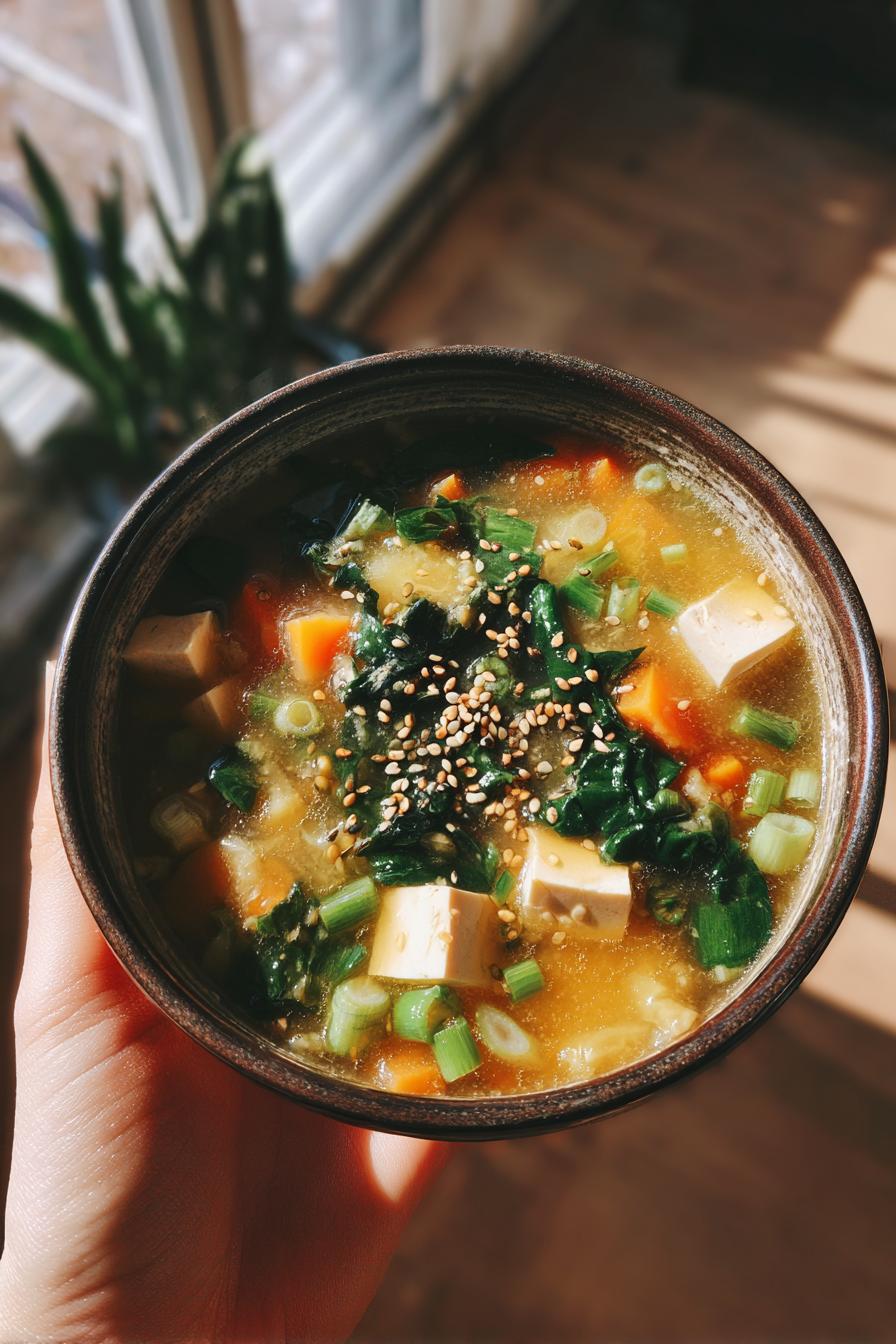
There’s something magical about a steaming bowl of miso soup – it’s like a warm hug from Japanese grandmothers everywhere! This simple, soul-warming dish has been my go-to comfort food for years, especially on chilly mornings or when I need something light yet satisfying. The beauty of miso soup lies in its perfect balance: earthy miso paste, silky tofu, and that briny kiss of seaweed all swimming together in harmony.
What I love most is how this traditional Japanese staple fits effortlessly into vegetarian diets while packing serious flavor. My first taste of authentic miso soup in Tokyo changed everything – suddenly canned soups seemed so… unnecessary. Now I make it weekly, tweaking the recipe just like my Japanese friend’s obaachan (grandma) taught me. The best part? You’re literally 15 minutes away from restaurant-quality miso soup right in your own kitchen!
Why You’ll Love This Miso Soup
This isn’t just any miso soup – it’s the kind that makes you pause mid-sip and go “Mmm!” Here’s why it’s become my kitchen staple:
- Weeknight superhero: Ready in 15 minutes flat – faster than waiting for takeout!
- Healthy comfort food: Packed with gut-friendly probiotics from the miso and plant-based protein from tofu
- Your soup, your rules: Throw in mushrooms, spinach, or a dash of chili oil to make it yours
- Pantry-friendly: Uses ingredients that keep forever (dried seaweed lasts ages in your cupboard)
Trust me, once you try this version, you’ll understand why Japanese families have been making it for centuries!
Ingredients for Miso Soup
Here’s everything you’ll need for the most comforting bowl of miso soup – I promise each ingredient plays a special role!
- 4 cups water: The base of our soup (though I sometimes use half water, half dashi stock for extra umami)
- 1/4 cup miso paste: White for milder flavor, red for bolder taste – I usually use a mix of both!
- 1/2 cup tofu: Cubed into 1/2-inch pieces (silken tofu melts beautifully, firm holds its shape)
- 1 sheet dried seaweed: That’s about 2 tablespoons when cut into small rectangles (I use wakame or nori)
- 2 green onions: Thinly sliced on the diagonal – they float prettily on top
See? Nothing fancy – just honest ingredients that work magic together!
How to Make Miso Soup
Okay, let’s get cooking! Making miso soup is easier than you think, but there are a few tricks I’ve learned over the years that make all the difference. Follow these steps and you’ll have restaurant-worthy soup in no time!
Step 1: Boil the Water
Grab a medium saucepan (about 2-quart size works perfectly) and pour in your water. Crank the heat to medium-high – we want it bubbling but not violently boiling. Pro tip: If you’re using dashi stock, now’s the time to add it too!
Step 2: Dissolve the Miso Paste
Here’s where most people mess up! Reduce heat to low and scoop your miso paste into a small strainer or ladle. Dip it into the hot water and gently press with a spoon – this prevents those pesky lumps. Stir slowly until it’s completely dissolved. Whatever you do, don’t let it boil now – high heat kills miso’s delicate flavor!
Step 3: Add Tofu and Seaweed
Toss in those cute little tofu cubes (about 1/2-inch size works best – big enough to spoon up, small enough to get multiple pieces per bite). Sprinkle in your seaweed pieces and watch them transform from crispy to silky right before your eyes!
Step 4: Simmer and Garnish
Set your timer for exactly 5 minutes – any longer and the tofu gets rubbery. Right before serving, sprinkle those gorgeous green onion slices on top. The contrast of fresh, crisp onions against the warm, savory broth? Absolute perfection!
See? I told you it was simple! Now grab your favorite soup spoon and get ready for the most comforting 15-minute meal you’ll ever make.
Tips for the Best Miso Soup
Want to take your miso soup from good to mind-blowing? These game-changing tips will have you slurping happily:
- Dashi is your friend: Swap half the water with dashi stock for insane umami depth
- Low and slow: Never boil after adding miso – it kills those precious probiotics!
- Timing is everything: Add tofu last to prevent it from getting rubbery
- Miso mixology: Combine white (shiro) and red (aka) miso for balanced flavor
Bonus: Always taste before serving – you can always add more miso but can’t take it out!
Miso Soup Variations
Oh, the fun part – making this miso soup your own! Here are my favorite ways to jazz it up:
- Mushroom magic: Toss in some sliced shiitakes when simmering – their earthy flavor is incredible
- Leafy greens: Spinach or baby bok choy wilt beautifully in the hot broth
- Spice it up: A drizzle of chili oil or sprinkle of shichimi togarashi adds nice heat
- Egg drop: Swirl in a beaten egg at the end for extra protein (my hungover college trick!)
The best part? No wrong answers – just delicious experiments!
Serving Suggestions for Miso Soup
Oh, the joy of pairing this miso soup! It’s perfect alongside a bowl of steamed rice – the classic Japanese breakfast combo. For lunch, I love it with simple sushi rolls or a crisp cucumber salad. Dinner? Add some grilled fish and you’ve got a complete meal that’ll make you feel like you’re dining in Tokyo. Honestly, this soup makes everything better!
Storing and Reheating Miso Soup
Here’s the deal with leftovers – miso soup keeps beautifully in the fridge for about 2 days (though mine never lasts that long!). Just pour it into an airtight container once cooled. When reheating, go gentle – low heat on the stove works best. Whatever you do, don’t microwave it on high or you’ll murder that delicate miso flavor. I usually add a splash of water when reheating since the seaweed loves to soak up the broth overnight!
Miso Soup Nutritional Information
Now, let’s talk numbers – but remember, your exact nutrition will vary based on ingredients! For a basic bowl (about 1 cup) with my recipe, you’re looking at roughly 70 calories, 5g protein, and 800mg sodium. Not bad for something this comforting! The tofu and seaweed pack in nutrients while keeping it vegetarian-friendly. Just watch the sodium if you’re sensitive – you can always use low-sodium miso paste!
FAQs About Miso Soup
Q1. Can I use yellow miso paste instead of white or red?
Absolutely! Yellow miso (sometimes called “awase”) is actually my favorite middle-ground option – milder than red but more complex than white. It’ll give your soup a nice golden color too. Just start with a bit less since it’s saltier than white miso.
Q2. Is miso soup gluten-free?
It can be! Traditional miso paste is made from soybeans, but some brands add barley or wheat. Look for “gluten-free” on the label – I’ve found great options at Asian markets. Also, check your seaweed packaging to be safe!
Q3. Why shouldn’t I boil the miso?
Great question! Boiling kills the live probiotics that make miso so good for your gut. It also makes the flavor harsh instead of mellow and sweet. Think of miso like honey – you’d never boil honey, right? Same idea!
Q4. Can I freeze leftover miso soup?
Honestly? I don’t recommend it. The tofu turns spongy and the flavors dull. But here’s my trick: freeze just the broth portion, then add fresh tofu and seaweed when reheating. Works like a charm!
Did you make this miso soup? I’d love to hear how it turned out! Leave a comment below or snap a photo – nothing makes me happier than seeing your soup creations!
Print15-Minute Miso Soup That Will Warm Your Soul Instantly
A simple and traditional Japanese soup made with miso paste, tofu, and seaweed.
- Prep Time: 5 minutes
- Cook Time: 10 minutes
- Total Time: 15 minutes
- Yield: 4 servings 1x
- Category: Soup
- Method: Stovetop
- Cuisine: Japanese
- Diet: Vegetarian
Ingredients
- 4 cups water
- 1/4 cup miso paste
- 1/2 cup tofu, cubed
- 1 sheet dried seaweed, cut into small pieces
- 2 green onions, sliced
Instructions
- Bring water to a boil in a pot.
- Reduce heat and stir in miso paste until dissolved.
- Add tofu and seaweed.
- Simmer for 5 minutes.
- Garnish with green onions.
- Serve hot.
Notes
- Use white or red miso paste based on preference.
- Add mushrooms or spinach for extra flavor.
- Adjust miso paste quantity for desired saltiness.
Nutrition
- Serving Size: 1 cup
- Calories: 70
- Sugar: 2g
- Sodium: 800mg
- Fat: 3g
- Saturated Fat: 0.5g
- Unsaturated Fat: 2g
- Trans Fat: 0g
- Carbohydrates: 6g
- Fiber: 1g
- Protein: 5g
- Cholesterol: 0mg